




- Monday 9:00AM - 4:00PM
- Tuesday 9:00AM - 4:00PM
- Wednesday 9:00AM - 4:00PM
- Thursday 9:00AM - 4:00PM
- Friday 9:00AM - 4:00PM
- Saturday Open by appointment only
- Sunday Closed
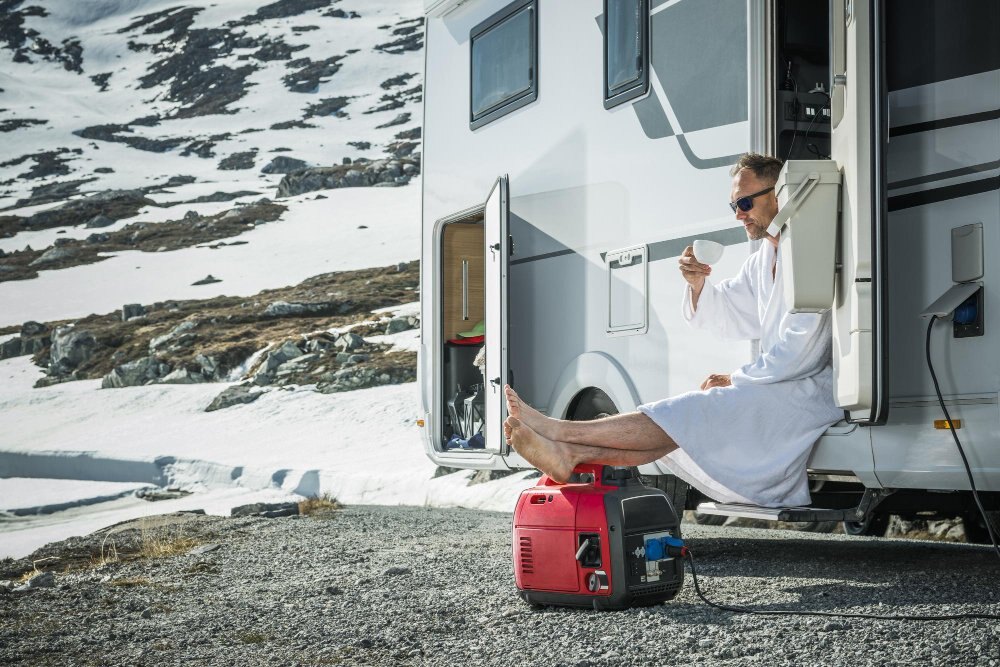
4 Season Campers in Ontario: What Four-Season Really Means
A 4-season camper is an RV built to keep its water lines, tanks, and living space from freezing in cold weather. That usually means a heated and enclosed underbelly, added insulation, protected plumbing, and a furnace strong enough to keep up.
The catch is that "four-season" has no official standard. It is a marketing label, and two RVs that both carry it can handle an Ontario winter very differently. Knowing what to look for matters more than the badge on the side of the unit.
Three-Season vs Extended-Season vs Four-Season RVs
|
Type |
Typical Cold-Weather Capability |
Best Suited To |
|
Three-season |
Designed mainly for spring through early fall |
Warm-weather trips |
|
Extended-season |
Features that allow camping into late fall and early spring |
Shoulder-season trips and the occasional cold weekend |
|
True four-season |
Built for sustained winter conditions with protected systems |
Owners who plan to live in the RV through winter |
Most RVs sold with a cold-weather package fall into the middle category. That is not a weakness. For many Ontario campers, extended-season is exactly the right level of capability.
What Does a 4 Season RV Actually Include?
Instead of relying on the label, look at how the RV is built. These are the features that do the real work in cold weather.
- Heated and enclosed underbelly to protect the water lines, valves, and tanks
- Tanks and plumbing located inside the protected area rather than exposed
- Insulation in the walls, roof and floor
- Windows that hold heat and resist condensation
- A furnace sized for the unit, with ductwork that reaches living and plumbing areas
- Enough propane capacity to run the furnace through long cold stretches
Features and specifications vary by manufacturer, model, and year. Ask to see them on the actual unit rather than assuming every cold-weather package is the same.
When an Extended-Season RV Is Enough
An extended-season RV suits many buyers, including those who want to camp earlier in spring and later in fall without planning to live in the unit through January.
- You camp mostly from spring to fall
- You want to stretch the season by a few weeks at each end
- You plan a cold-weather trip or two, such as a ski weekend
- You will have power and water access or a clear plan without them
The main risk is buying extended-season capability and then expecting it to perform like a full winter home. Be honest about how you will use the RV most of the time.
When You Need a True Four-Season Build
A true four-season build makes more sense when winter use is the plan, not the exception.
- You intend to live in the RV through an Ontario winter
- You will stay for long stretches in sustained freezing temperatures
- You will camp at sites where services may be limited in winter
- You want the greatest margin for freeze protection and heating
Even then, winter living takes planning for water, power, propane, and snow. A capable RV helps, but it does not replace preparation.
4 Season RV Trailers vs a 4 Season Motorhome
Searches for 4-season RV trailers and 4-season motorhomes usually come from different buyers, and the two body types handle cold differently.
Travel trailers sit on a frame with plenty of exposed underside, which is why a heated and enclosed underbelly matters so much. They are also simple to connect to power and water at a seasonal site. Winter towing adds its own considerations, so consider your tow vehicle, too.
Motorhomes add an engine and chassis to the picture. The living space depends on the same insulation, tank protection, and heating, but you also need a vehicle that starts and runs reliably in the cold. Some models offer cold-weather packages while others do not. Our Class A vs Class C comparison explains how the two motorhome types differ.
What Cold-Weather Camping in Ontario Involves
Even a well-built RV does not make winter camping effortless. Plan for these realities before you commit.
- Campground water is often shut off for the season, so you may rely on your fresh water tank
- Warm indoor air meeting cold surfaces creates condensation that needs managing
- Furnace use burns propane quickly, so plan your refills
- Snow, ice and slippery steps affect setup, towing and braking
- Cold weather is hard on seals, batteries, and heating components, so routine servicing matters
What Motor Home Travel Carries
Motor Home Travel's new Keystone Passport travel trailers come with a heated and enclosed underbelly, and the Passport Super Lite also includes an extended season camping package. The 2025 Passport Super Lite 2870RL is one example.
Note the wording: extended season. These units are designed to stretch your camping season into cooler months, not to serve as a full-time winter home in deep cold. If your plans are more demanding, explain how you intend to use the RV before you buy so the team can tell you whether a specific unit fits.
Common Mistakes When Buying a Four-Season RV
Trusting the badge instead of the build
A four-season sticker says very little. The underbelly, tanks, insulation, and furnace tell you far more.
Buying for one cold trip
Planning around a single January weekend can push you toward a unit you will not need the rest of the year. Shop for how you camp most often, then check how it handles the occasional cold stretch.
Forgetting the tow vehicle
A trailer that handles winter well still has to reach the campsite. Snow, ice, and cold-weather braking affect the whole setup.
Skipping the winter plan
Decide where you will get water, how you will manage propane, and what you will do if a hard freeze hits a campground that has shut off its lines.
Not seeing the features on the actual unit
Brochures describe a model line. Confirm the features on the specific RV you are considering.
How to Choose the Best 4 Season Camper: Questions to Ask Before Buying
There is no single best 4-season camper. The best one matches how you actually camp. These questions help cut through the marketing.
- What does the manufacturer mean by four-season or extended-season on this unit?
- Is the underbelly fully enclosed and heated?
- Are the tanks and water lines inside the protected area?
- How are the roof, floor, and walls insulated?
- What type of windows does it have?
- What is the furnace output, and does the ductwork reach the plumbing areas?
- How much propane does it carry?
- Can I see these features on the actual unit?
Ready to Find a 4 Season Camper?
If you are comparing four-season campers for sale in Ontario, tell Motor Home Travel how you plan to camp and what time of year you want to use the RV. Browse Motor Home Travel's new RV inventory or contact the team to talk through the options.
Important Product Note
Cold-weather features and packages vary by manufacturer, model and year. Always confirm the specific features and limits of the exact RV you are considering with the manufacturer's information before you buy.
Frequently Asked Questions
What is a 4-season camper?
It is an RV built to resist freezing and hold heat in cold weather, usually with a heated and enclosed underbelly, added insulation, and protected tanks and plumbing. There is no official standard, so features vary.
Is there an official definition of a four-season RV?
No. The term is a marketing label rather than a regulated standard, so it pays to look at the actual construction.
What is the difference between extended-season and four-season?
Extended-season RVs are set up to camp into cooler shoulder months. True four-season RVs are built for sustained winter conditions with protected systems and heating designed for deep cold.
Can I live in a 4 season RV through an Ontario winter?
It can be done with a true four-season build and careful planning for water, power, propane and snow. An extended-season unit is better suited to shorter cold-weather trips.
What should I look for in 4 season RV trailers?
Look for a heated and enclosed underbelly, protected tanks and plumbing, solid insulation and a properly sized furnace, and confirm them on the actual unit.
Do 4 season motorhomes exist?
Some motorhome models offer cold-weather packages, while others do not. Availability depends on the model, so check the specific unit.
Do four-season RVs use a lot of propane?
Cold-weather camping typically uses much more propane than summer camping because the furnace runs more often. Plan your refills.
Will a four-season RV still need winterizing?
It depends on how you use it. If you stop using the water system and store the RV for winter, it still needs proper winterization.
What is the best 4 season camper for the money?
The best choice is the one that fits how you camp. Someone camping through October needs something different from someone planning a January ski trip, so define your use first.
Where can I find four season campers for sale in Ontario?
You can browse new and pre-owned units on the Motor Home Travel website and ask the team to compare cold-weather features across models.
Category Name
Blogs
Manufacturer Qty
0